
Description
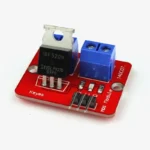
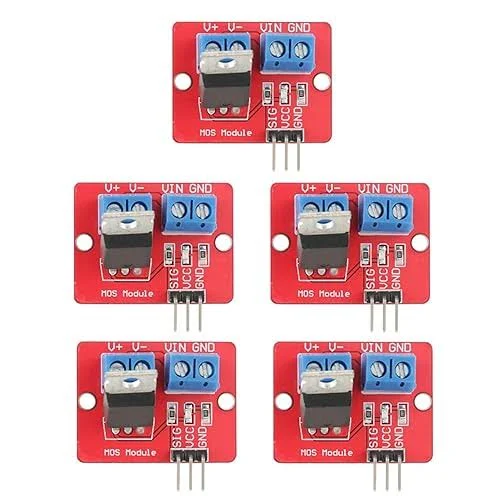
These modules act as an interface between the low-power output pins of your microcontroller (which cannot supply much current) and high-power LEDs that require stable, regulated current or higher voltages.
-
Logic Compatibility: Designed to accept 3.3V or 5V logic signals, making them perfect for direct connection to STM32 I/O pins without extra circuitry.
-
PWM Dimming: By rapidly switching the LED on and off (at a frequency usually undetectable by the human eye), the module allows you to achieve smooth dimming from 0% to 100% brightness.
-
Constant Current/MOSFET Control: Many of these modules use a MOSFET to switch higher voltages and currents, while others integrate constant-current driver ICs (like the CN5711) to protect the LEDs from overheating and burnout.
-
Versatile Applications: Ideal for driving LED strips, powerful flashlights, or status indicators in robotics and IoT projects.
Typical Module Characteristics
-
Input Voltage: Usually supports a range like 3.3V to 5.5V (or wider for dedicated high-power versions).
-
Output Current: Often adjustable (e.g., 30mA to 1500mA) depending on the specific module’s architecture.
-
Connections: Standard headers for logic input (PWM pin, GND, VCC) and output terminals for the LED anode and cathode.
Important Usage Considerations
-
PWM Frequency: Ensure your STM32 timer configuration provides a suitable PWM frequency; most modules perform best between 100Hz and 1kHz to avoid visible flickering.
-
Heat Dissipation: If driving high-power LEDs (e.g., >1W), ensure the module is adequately ventilated or mounted on a surface capable of handling the heat.
-
Common Ground: Always ensure the GND pin of the PWM module is connected to the GND pin of your STM32 to maintain a consistent reference for the PWM signal.

Reviews
There are no reviews yet.