
Description
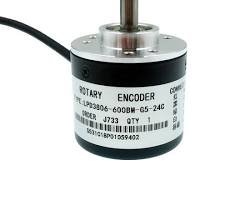
An Incremental Rotary Encoder (600 P/R) is a high-precision electromechanical sensor that measures the angular rotation of its shaft and converts it into digital electrical pulses. A common hobbyist and light-industrial model in this category is the LPD3806-600BM series.
Product Description
-
Core Function: As the shaft rotates, the internal optical disk interrupts a light beam, generating square wave pulses on two separate output channels (Phase A and Phase B).
-
600 Pulses Per Revolution (P/R): This means the encoder outputs 600 distinct pulses for every full 360-degree rotation. By reading both rising and falling edges of Phase A and Phase B (quadrature decoding), your STM32 can achieve an effective resolution of 2,400 counts per revolution, offering exceptional precision for speed and position tracking.
-
Direction Tracking: Because Phase A and Phase B are offset by 90 degrees (quadrature), the microcontroller can determine the direction of rotation (clockwise vs. counter-clockwise) by checking which phase goes high first.
Key Specifications
-
Operating Voltage: Typically 5V to 24V DC.
-
Output Type: Often NPN Open-Collector. (Note: This is highly advantageous for 3.3V systems. You can power the encoder with 5V, but connect the Phase A and B pull-up resistors to your STM32’s 3.3V rail, making the signal perfectly safe for the microcontroller).
-
Maximum Mechanical Speed: Usually rated for up to 5000 RPM or 6000 RPM.
-
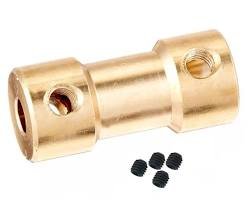
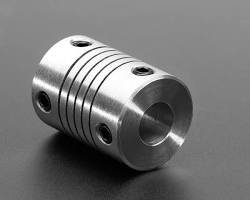
Shaft Size: Standard 6mm solid stainless steel shaft, easily compatible with flexible aluminum couplings.
Price Range & Visual Reference
-
Price in India: Typically ranges between at major robotics suppliers (such as Robu, Robocraze, or Quartz Components).
-
Visual Identification: Look for a sturdy cylindrical aluminum body (usually black and silver) with a 6mm protruding shaft and a thick 4-wire cable exiting from the side or back.
Usage Tips for STM32
-
Wiring: Standard wire colors are typically: Red (VCC), Black (GND), Green/White (Phase A), and White/Yellow (Phase B). Always check the specific datasheet or sticker on the motor.
-
Hardware Timers: The STM32 has built-in Hardware Encoder Interface modes on its Advanced and General-Purpose Timers. Instead of using interrupt-heavy code to count the 2,400 ticks per revolution, you can configure an STM32 timer to handle quadrature decoding automatically in the background with zero CPU overhead!
-
Pull-up Resistors: If your encoder is an NPN Open-Collector type, you must enable the internal pull-up resistors on your STM32 GPIO pins, or add external 10kΩ resistors pulled up to 3.3V.


Reviews
There are no reviews yet.