
Description
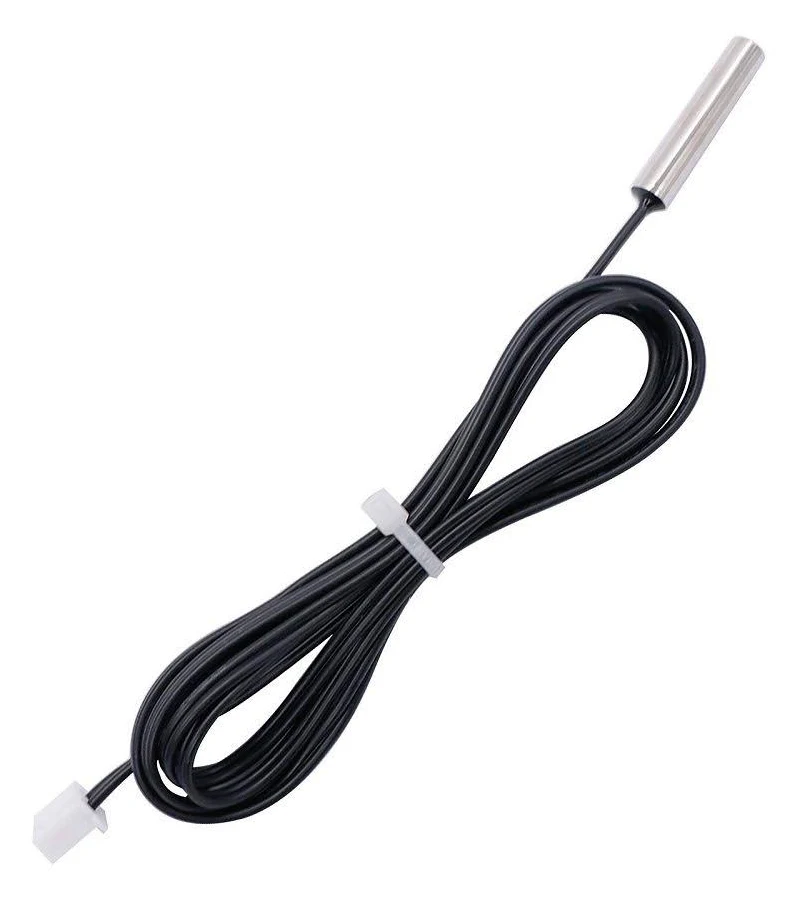
A 10k NTC (Negative Temperature Coefficient) Thermistor is a type of temperature-sensitive resistor whose electrical resistance decreases as its temperature increases. It is widely used in embedded systems, lab kits, and industrial applications for accurate temperature measurement and thermal protection.
Key Features & Specifications
-
Nominal Resistance: at standard room temperature ().
-
Temperature Coefficient: Negative (NTC) — resistance drops non-linearly as temperature rises (e.g., higher temperature = lower resistance).
-
B-Value (Beta Constant): Typically around to depending on the exact material composition, which defines its sensitivity curve.
-
Mounting / Package: Usually available as a bead-type component with radial epoxy coating and two long axial/radial leads for easy breadboard or PCB insertion.
-
Operating Temperature Range: Generally spans from to (or higher for glass-bead types).
Common Applications
-
Temperature Sensing: Used in digital thermometers, HVAC systems, and battery management packs.
-
Thermal Protection: Overheat protection in motor drivers, power supplies, and charging circuits.
-
Microcontroller Experiments: Interfacing with ADC pins on development boards (like the STM32) via a voltage divider network to convert resistance changes into temperature readings.
Usage Tips & Circuit Design
-
Voltage Divider Configuration: Because microcontrollers measure voltage rather than resistance directly, the thermistor must be placed in a voltage divider circuit with a fixed resistor connected to VCC and Ground.
-
Steinhart-Hart Equation / Look-up Tables: Due to the non-linear relationship between temperature and resistance, firmware typically uses the Steinhart-Hart equation or a pre-calculated lookup table to translate raw ADC values into precise Celsius or Fahrenheit degrees.



Reviews
There are no reviews yet.